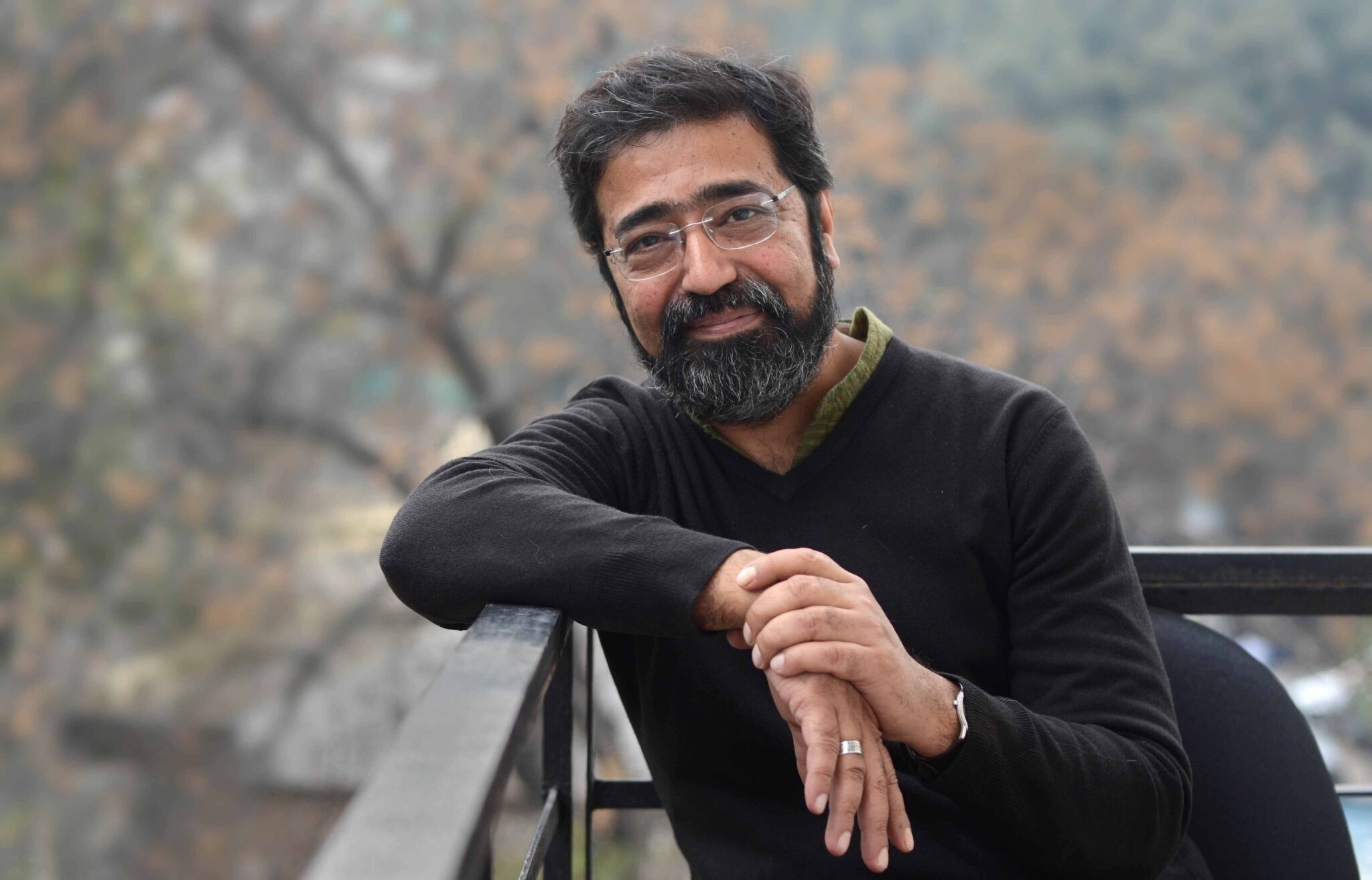
Serpentine will present a major solo exhibition of new and existing works by Amar Kanwar that will transform the building of Serpentine North into a meditative visual and sonic environment
The exhibition will mark the premiere of a new seven-screen film installation titled The Charcoal Man
At Serpentine North
23 September 2026 – 31 January 2027
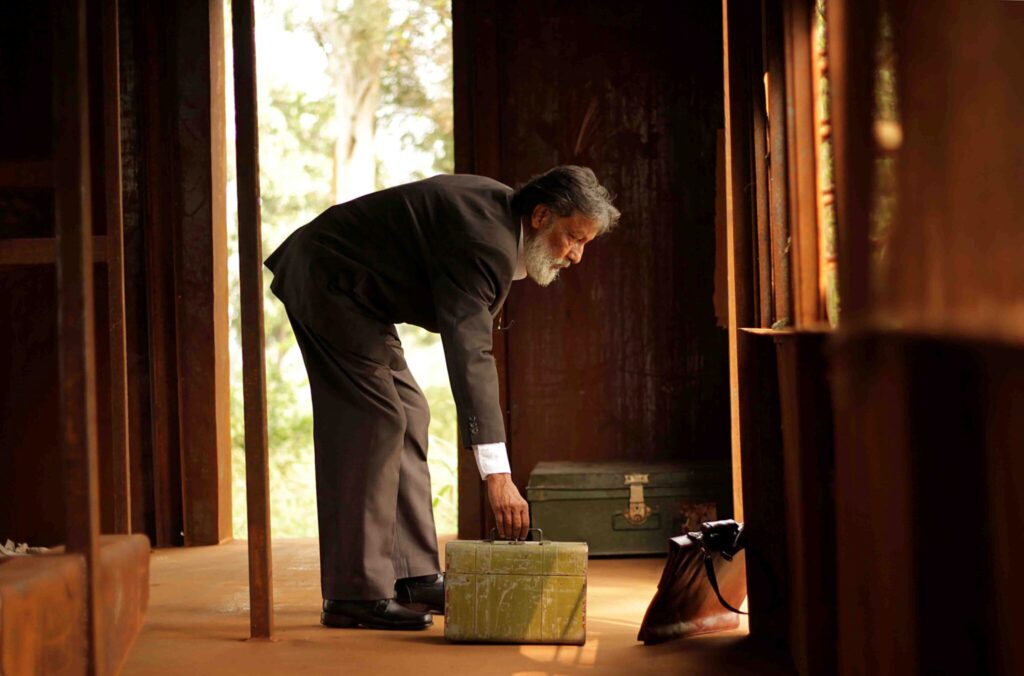
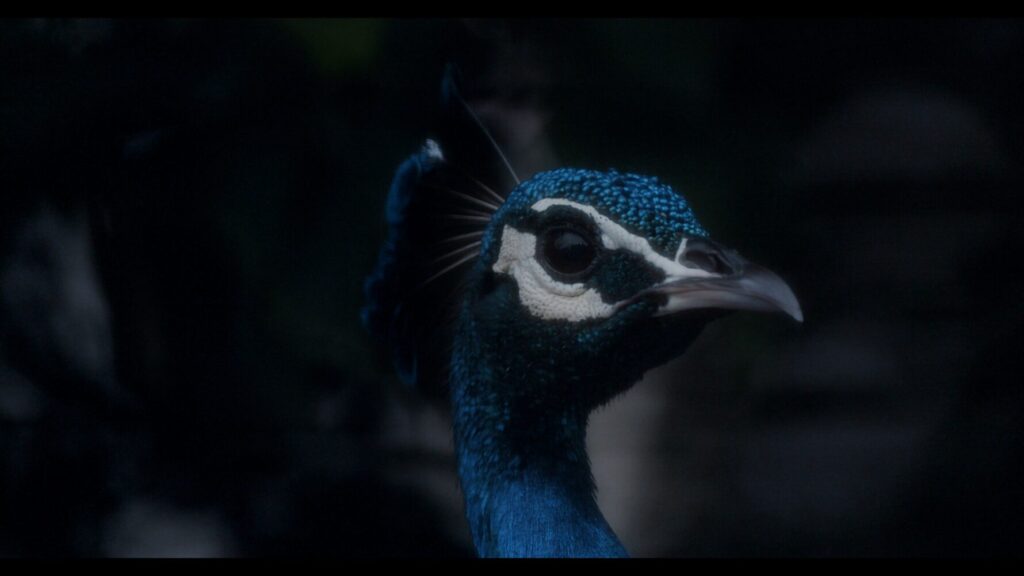
Left: Amar Kanwar, Such a Morning, 2017 (film still). Digital video, 4K, colour, sound, 85 min. Courtesy of the artist and Marian Goodman Gallery. Right: Amar Kanwar, The Peacock’s Graveyard, 2023 (film still). Digital video installation, 7 screens, dimensions variable, 28 min., 16 sec. Courtesy of the artist and Marian Goodman Gallery.
Serpentine is delighted to announce a major solo exhibition of New Delhi-based artist and filmmaker Amar Kanwar (b. 1964, New Delhi, India), one of the most prominent artists working in moving image today. Presented at Serpentine North, the exhibition will run from 23 September 2026 until 31 January 2027.
For over two decades, Kanwar has developed a distinctive body of lyrical films that move between documentary, travelogue and visual essay to explore the specific conditions of the Indian subcontinent. Having produced and directed numerous films and multi-video installations, Kanwar’s poetic and contemplative works are frequently marked by the history of his country, tracing the legacies of decolonialisation and the Partition of India and Pakistan. Whilst charged with a regional specificity and deeply personal histories, Kanwar’s work grapples with some of the most pressing issues of our time. Reckoning with the past as a means to better comprehend the present, Kanwar bears witness to social upheaval, displacement, power, violence, justice and memory, ultimately revealing what unites – rather than differentiates – us, regardless of geography or context.
Within the darkened galleries, visitors will encounter a trilogy of transfixing films by Kanwar: the feature-length Such a Morning (2017), the multi-screen installation The Peacock’s Graveyard (2023), and a new multi-screen installation titled The Charcoal Man (2026), which will premiere at Serpentine.
Amar Kanwar said: “Our capacity for evil is not new and yet the last decade has twisted this knife deeper into our souls. On our knees, face to face with our own selves, the bottomless well reflects the sky. I cannot remember anymore, said the patriot to the traitor. For I have forgotten what I have forgotten. That’s not a problem he replied, as I have forgotten too.
I am grateful to Serpentine for this very special invitation. I am also deeply grateful to a small set of friends who have helped me make these film installations. And for the support that I have received. Everyone has shared a part of themselves while making this possible.”
Bettina Korek, CEO, Serpentine, and Hans Ulrich Obrist, Artistic Director, Serpentine, said: “Eighteen years ago, Serpentine included Amar Kanwar in Indian Highway, a polyphonic group exhibition that travelled across continents. It is with great joy, and a sense of circularity, that we present a dedicated exhibition of his work in autumn 2026.
Kanwar is one of the singular voices of our time. A pioneer of moving image who has expanded what film can be and how it can exist within an exhibition, his work is at once poetic, political, ecological and deeply ethical. Kanwar has built an extensive oeuvre that resists the accelerations of our present and instead proposes, as the late philosopher Édouard Glissant might say, a ‘different rhythm’ – a trembling, attentive way of looking at the world.
We are particularly delighted to premiere an entirely new work, The Charcoal Man, developed by Kanwar over three years during an almost reclusive period of research, filming, writing and listening. Alongside this new work, the exhibition will bring together a constellation of interconnected earlier works. Through an amalgamation of fables, news, music and archival documentation, Kanwar’s multilayered films and installations interrogate traditional narratives inviting audiences to reflect on the realities of our current moment.”
The exhibition opens with the poetic seven-screen installation The Peacock’s Graveyard. Originally commissioned for Sharjah Biennial 15 and presented in London for the first time, it is described by the artist not as “a lament or mourning, but perhaps a kind of gift, a collection of stories, something to keep by one’s side every day, or take along if going someplace, or to help us reconfigure life […] These stories lay the groundwork for reflecting on our unbearable arrogance, delusions and deep desire for violence.”
In this work, Kanwar creates a mesmerising tapestry of imagery across seven screens overlaid with stories written by the artist that draw on contemporary and ancient fables and oral histories, alongside the artist’s own personal experience. Addressing profound questions that consider the fleeting nature of human existence and the cycle of life, The Peacock’s Graveyard offers new forms of reconciliation, resistance and the potential for transformation, inviting viewers to reflect upon collective and individual truths.
Presented in one of Serpentine North’s characteristic brick-vaulted Powder Rooms is Kanwar’s feature-length film titled Such a Morning. First presented at documenta 14 in Athens, Greece, and Kassel, Germany, Such a Morning is a slow meditation on two people’s engagement with truth and the subject of darkness. Conceived as a modern parable, it follows the sudden retirement of a famous mathematician and prominent professor who finds refuge in an abandoned train carriage in a forest. Speculation on his motives from those who knew him are proposed via intermittent subtitles: ‘a deep inner question of the soul’, ‘a complex conflict of ideology and prejudice’, ‘he was beginning to lose his eyesight and therefore retreated to acclimatise to darkness before total darkness descended.’
Over the course of the 85-minute film, the unnamed protagonist blacks out the train carriage windows where he momentarily loses sight and begins to receive new visions in the dark. These revelations – part-epiphany, part-hallucination – take form in a series of letters that examine forty-nine types of darkness that are catalogued within an ‘Almanac of the Dark’. A parallel story centred on a woman also emerges, defying singular interpretation as it runs alongside the protagonist’s own narrative.
Alongside these immersive film installations, the perimeter galleries of Serpentine North will be populated by the professor’s letters. Offering a tactile extension to the letters that continue to be written by the professor in and beyond Such a Morning, this striking, yet delicate, series is comprised of multiple projected images, videos and texts on handmade ramie and cotton fibre papers. The papers for the letters were made by Sherna Dastur.
The exhibition at Serpentine will also mark the premiere of a new seven-screen film installation titled The Charcoal Man. In ways, an extension of The Peacock’s Graveyard, this new work emerges from the artist’s ongoing engagement with the 1947 Partition of the Indian subcontinent into two nations. Building on themes present in much of Kanwar’s work – particularly the interconnection, or coexistence, of fact, fantasy and fiction – the artist has said that this work seeks “coherence from disintegration, insight from fusion, and stories from within stories.” Presented in one of Serpentine North’s Powder Rooms, the installation weaves together images and text and aims to trace the cycles of betrayal, vengeance, illusion, passion, jealousy and rage that continue to permeate society today.
The exhibition continues Serpentine’s ongoing dialogue with the artist that started with the group exhibition Indian Highway in 2008. Presented at Serpentine South, the exhibition was the culmination of extensive research across India that offered a snapshot of a dynamic generation of artists working across a range of media. Since then, Kanwar contributed to Serpentine’s Map Marathon in 2010, and in 2018 was included in On Earth, Structure and Sadness: a Serpentine cinema programme that presented the work of artists who address machines, infrastructure and their impact on landscapes and the biosphere.
To coincide with the exhibition, Serpentine will publish a new catalogue. Designed by Sherna Dastur, it is envisioned as a storybook for adults that will bring together a sequence of images and texts taken from the stories situated in The Peacock’s Graveyard, Such a Morning and The Charcoal Man, alongside an extensive interview with Serpentine’s Artistic Director, Hans Ulrich Obrist.
Amar Kanwar is curated in close collaboration with the artist by Chris Bayley, Exhibitions Curator, with Kit Gurnos, Assistant Exhibitions Curator.