If you’ve noticed your eyes are feeling uncomfortable into the spring months, you are not alone.
- A high 43% of Brits said their eyes feel more strained through the winter into spring months
- A third (33%) of Brits notice blurry vision and 28% have dry or irritated eyes during the winter into spring months.[1]
That’s according to new real-world research by MacuShield, the brains behind a range of specialist eye supplements.[2] The same research poll also found that nearly two thirds (64%) of respondents questioned said their eyes felt more tired in the winter and spring seasons than other seasons.[3]
Looking at why the spring and winter months are causing eye health challenges for many of us, GP, with a specialist interest in nutrition, Dr Nisa Aslam says: “It’s a combination of risk factors such as increased screen time as we stay indoors more; reduced daylight hours and dry indoor air.[4],[5] Coupled with this many of us tend to change our diets across the winter and spring seasons which often lack the correct eye-supporting nutrients, plus we are all guilty of not eating five fruit and vegetables a day.[6] In addition, despite these seasonal eye health challenges, sadly just 12% think about their eye health in the spring, compared to a much larger proportion of respondents – 51% – who think about their eye health more in the summer months.”[7]
GP, Dr Nisa Aslam continues: “The same MacuShield research poll also found that 63% of respondents highlighted that their eyes have deteriated with age.[8] This is regardless of the fact that many of us rate our eye health as generally good (6.5 out of 10[9]). In addition, the MacuShield research found that 84% of people worry about the impact of deteriorating sight could have on their quality of life.[10] Brits know the dangers of poor eye health and 79% noted the thought of risking their sight makes them more likely to look after their eye health.[11] As a result, as a nation we could all really see the difference if we supported our eye health a lot more, especially when it comes to better dietary habits, so now is the time to take urgent action.”
For many, helping to look after our vision is about preserving independence and everyday life as 52% see vision as essential to their quality of life.[12] In fact, the MacuShield real-world research poll found that:
- 54% of those questioned want to maintain their quality of life
- 43% of people polled want to remain independent
- 41% want to continue working
- 30% want to keep driving
- 29% said they wanted to stay connected with friends and family.[13]
Despite this, nearly half of respondents (49%) said declining vision had already stopped them from being as active as they would like,[14] which is worrying.
Dr Nisa Aslam adds: “It’s evident how important eye health really is, however 57% of Brits say eye health only comes into focus when they renew their commitment to healthy living.[15] Yet our eyes should never be an afterthought and hence eye health should remain front of mind.”
But, the MacuShield research has also uncovered noticeable uncertainty around everyday eye health challenges as well as big knowledge gaps around how to properly support eye health in winter months and beyond.
The Seasonal Vision Challenges
It shouldn’t come as too much of a surprise that so many of us are struggling with our eye health during the winter into spring months. Dr Nisa Aslam adds that the colder months create a perfect storm for tired, strained eyes. This is often driven by lifestyle changes, environmental factors and nutrition habits.[16] “During the cooler and damper months, people often spend a lot more time indoors, repeatedly in front of screens, while also being exposed to lower light levels and drier air. All of these factors can place additional strain on the eyes.[17],[18]
“In fact, the MacuShield research shows that 77% of people spend more time indoors using screens during the wetter and colder months,[19] with 26% saying they spend much more time than usual.[20] As a result, 40% of respondents noted that increased screen use negatively affects their eye health.”[21]
Dr Nisa Aslam continues: “We blink less when we use screens, which can make eyes feel dry.[22] Plus, the light from screens can lead to tired eyes,[23] especially when used in a dim environment. Close-up screen use can also lead to something called near focus fatigue.[24] Near focus fatigue occurs when the eyes are forced to maintain close focus for extended periods, placing sustained strain on the ciliary muscles[25] responsible for adjusting the eye’s lens. Over time, this can lead to tired, dry eyes.[26] Sadly, only 31% of people have heard of near focus fatigue, according to the MacuShield research.[27]
“There’s also the impact of limited light outside during the cooler months including Spring. Lower daylight levels mean eyes must constantly adapt to dimmer, artificial indoor lighting and over a third (37%) of people in the MacuShield survey believe poor lighting during the winter may be affecting their eye health.”[28]
Dr Nisa Aslam explains: “Lower daylight levels mean your eyes have less ambient light, forcing them to work harder. Plus, the cold air outside combined with indoor heating reduces humidity, causing natural tears to evaporate more quickly and causing a dry, irritated feeling.”
Driving can also be more of a challenge during the cooler and less daylight months. The MacuShield survey found that 58% of respondents would rather drive in the summer months than any other season,[29] with 46% saying it’s because the weather makes it feel more dangerous to drive in the colder, wetter months.[30]
Public Health Nutritionist Dr Emma Derbyshire says: “Driving places extra demands on our vision when there are low light levels, glare from headlights, rain and generally poor weather conditions, which all make it harder for the eyes to focus quickly and clearly.”
Eating The Rainbow
The cooler months can also make it harder to ‘eat the rainbow’[31] – a huge contributor to an eye-friendly lifestyle. A very small 25% of people believe they have a healthy diet and get all the eye health nutrients they require, which mean that 75% of us are not.[32] Clinical nutritionist, Suzie Sawyer explains: “When the weather is wetter and cooler, people are drawn to comfort foods and are often less inclined to prioritise fruit and vegetables, which pack in numerous nutrients that help support our eye health such as vitamin B2, copper as well as antioxidants such as vitamin C. However, many foods that help support our eye health, may also be out of season or more expensive, making them less accessible.”
Although 82% of people think what you eat can influence the health of your eyes[33] and 68% agree or strongly agree that vitamins and minerals are important for eye health,[34] there are some misconceptions around eye-friendly foods. Over half (53%) of people questioned in the MacuShield survey believe eating carrots is the best way to help protect vision,[35] and 62% say carrots would be their first dietary change for eye health,[36] despite the fact that eye health relies on a much broader range of nutrients. As well as the impact that winter has on our dietary choices, there is also a general lack of knowledge around eye-health nutrition. For example, when asked what provides lutein, a macular carotenoid, 42% of people said they didn’t know.[37]
Dr Emma Derbyshire explains: “Lutein is one of three macular carotenoids along with meso-zeaxanthin and zeaxanthin, which form the macular pigment. This is in the central part of the retina in the eye which it’s responsible for sharp, detailed vision.”
The body can’t make these macular carotenoids on its own so they must be obtained through the diet from bright coloured vegetables and fruit such as corn, orange and yellow peppers to foods such as kale, spinach, broccoli, peas, or a supplement. MacuShield’ s range of supplements contain a blend of the three macular carotenoids to help fill any dietary gaps during winter and also throughout the year.
Oily Fish Love
The omega-3 fatty acid – Docosahexaenoic acid (DHA) – is good news for our eyes. Suzie Sawyer explains: “DHA is of particular benefit for our eyes, as the cell membranes of the retina contain a high concentration of DHA. We need 250 milligrams (mg) of DHA daily to help to maintain normal vision.”[38]
“DHA is found in oily fish such as sardines and salmon yet just 32% of people eat oily fish once a week and 14% say they never eat it,”[39] adds Dr Emma Derbyshire. As a result, we need educating on an eye-friendly diet.”
Why Our Eyes Needs Some Nutrition TLC
Caring for our eyes is important all year round, but particularly during seasonal moments when certain changes can have more of a detrimental impact on eyes. Dr Nisa Aslam says: “Regular eye tests remain important despite 42% of people admitting that they’ve delayed getting an eye test because they weren’t sure the symptoms were serious enough.[40] Eye tests can find problems before you even know about them, so it’s important to get your eyes regularly tested.”
Although it’s tempting to indulge in comforting, stodgy foods, Dr Emma Derbyshire reiterates the importance of dietary changes. “Eating oily fish at least once a week and consuming an abundance of leafy greens, colourful fruits and vegetables daily is vital for our nutrition health. For those of us finding it hard to eat oily fish weekly and five fruit and vegetables a day, then bridging dietary gaps with a quality, eye health supplement and an active lifestyle would be sensible.”
Controlling screen usage is also important. Only 37% of people have heard of the 20-20-20 rule for eye health.[41] Of those, 26% practice it every day.[42]
Dr Nisa Aslam explains: “This requires taking a break every 20 minutes to look at an object at least 20 feet away for a duration of at least 20 seconds. It means eyes get a break from screens. Indoor lighting should not be overlooked either. Poor or uneven lighting can force the eyes to work harder, increasing strain and fatigue.”
MacuShield: Bridging Dietary Gaps
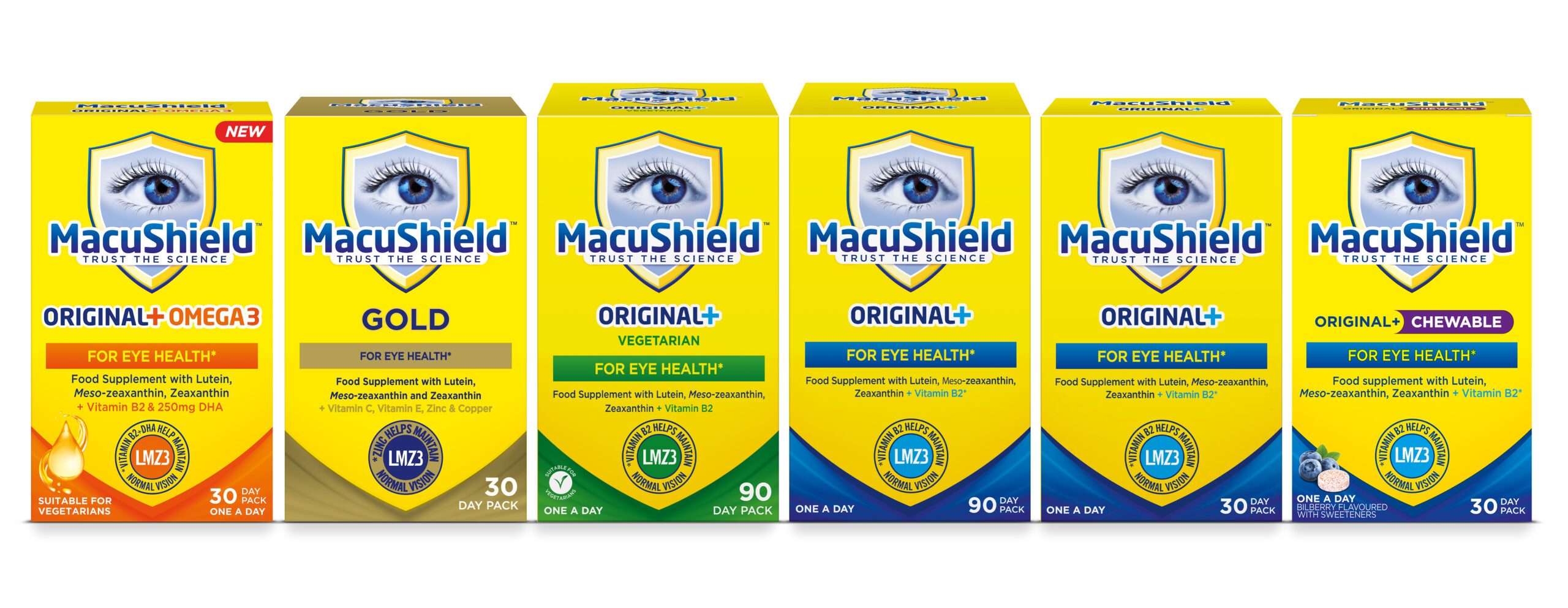
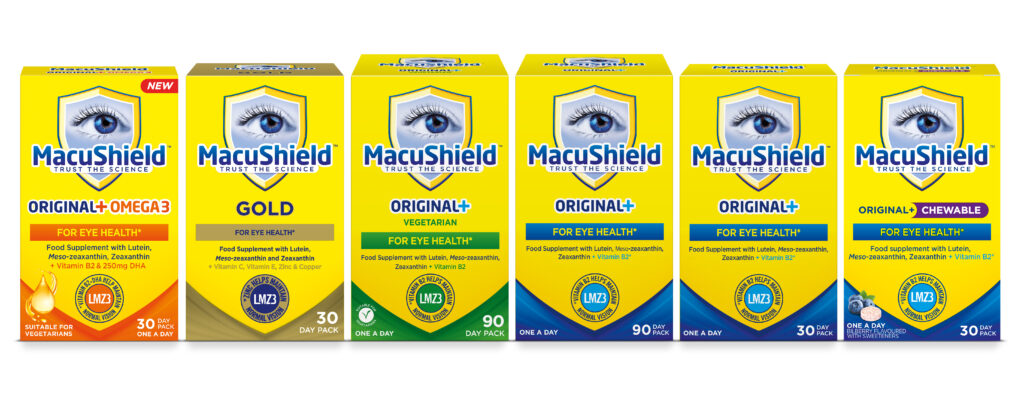
Alongside eating a healthy, balanced diet and having an active lifestyle, the MacuShield range of
daily supplements offers a simple way to help bridge any dietary gaps thanks to targeted blend of vitamins and minerals, such as Vitamin B2 and Zinc,which each help maintain normal vision.Here’s a fast summary to the range.
MacuShield Original+[43]: Alongside the LMZ3 – a nutrient blend of the three macular carotenoids – lutein (10 mg), meso-zeaxanthin (10 mg) zeaxanthin (2mg) – MacuShield Original+ contains vitamin B2 (0.3 mg), also known as riboflavin, which helps maintain normal vision. Catering to varying needs, the one-a-day formula also comes in a vegetarian capsule, as well as in a chewable, bilberry tablet format. Importantly the vitamin B2 in the Original+ equates to 21% of the nutrient reference value (1.4mg),[44] and the Great Britain nutrition and health claims (NHC) register officially recognises that riboflavin (vitamin B2) contributes to the maintenance of normal vision.
MacuShield Gold[45]: MacuShield also recognises the changing nutrient needs of individuals as they
progress through adulthood. As a result, MacuShield Gold – the most advanced formula in the MacuShield family – contains additional vitamins and minerals alongside their LMZ3 macular carotenoids in a three-a-day soft gel capsule format.MacuShield Gold contains vitamin C (500mg), vitamin E (268mg), zinc (25mg), and copper (2mg).
The latest national health claims noted that vitamin C, vitamin E, and copper each contribute to the protection of cells from oxidative stress, while zinc contributes to the maintenance of normal vision. Oxidative stress in all body tissues increases with age so it is important to maintain the intake of antioxidant nutrients.
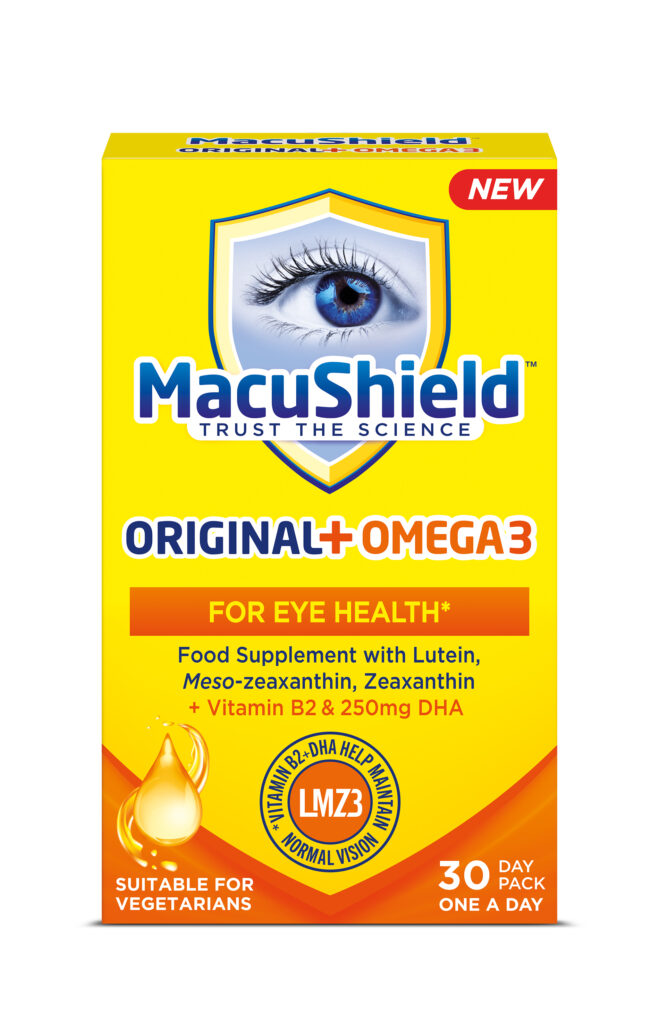
MacuShield™ Original+ Omega 3[46]: The blend of all three macular carotenoids – lutein, meso-zeaxanthin, and zeaxanthin – PLUS vitamin B2 and a daily dose of 250mg of DHA – which each help to maintain normal vision with just one capsule daily.[47]
As we have already outlined, vitamins B2 and 250mg of DHA each play a role in the eye but we know that dietary shortfalls are common. Alongside a healthy and balanced lifestyle, MacuShield™ Original+ Omega 3 can help bridge the dietary gaps and help the eye to get the nutrients it needs, [48] as well as being suitable for vegetarians and vegans.
Each dose of MacuShield™ Original+ Omega 3 contains:
- 250mg of DHA
- 0.3mg of vitamin B2, which is one-fifth of the nutrient reference value (NRV)
- 10mg of lutein
- 10mg of meso-zeaxanthin
- 2mg of zeaxanthin.
Planet friendly: The DHA in MacuShield Original+ Omega 3[49] comes from algal oil. Algal oil is a sustainable plant source of DHA that provides an efficient and more environmentally friendly ingredients that appeal to everyone including those of us that are vegetarians and vegans too.
Last word
Dr Nisa Aslam warns: “It’s time to take action in supporting our eye health, as it’s clear from the MacuShield real-world research data that Brits are experiencing eye-related issues, often thanks to seasonal changes like the winter into spring months.”
From poor light, screen time and more time indoors, to a lack of nutrients, the cooler, wetter and less daylight months isn’t the best time for eyes it seems. There’s no time like now to start putting eye health at the forefront of our minds, and if it’s proving difficult to get the essential nutrients through diet alone, then a food supplement such as those from the MacuShield[50] family, can help bridge dietary gaps, alongside a balanced, healthy lifestyle.”